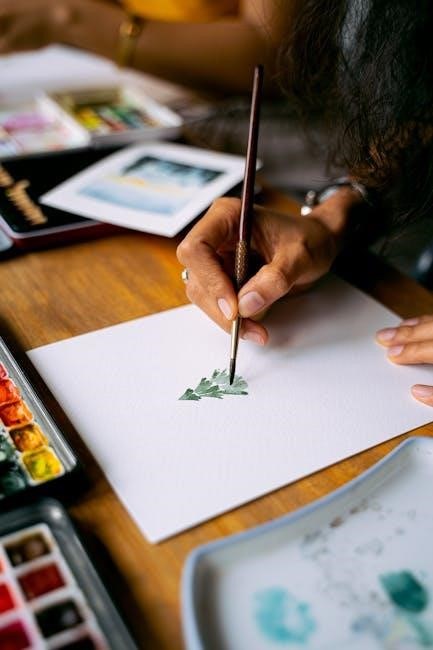
Watercolor unlocks creative possibilities for all skill levels; explore free tutorials and downloadable PDFs to begin your artistic journey today!
Learn essential techniques, fix mistakes, and discover the versatility of watercolor through beginner-friendly resources and a comprehensive 11-page FREEBIE.
What is Watercolor?
Watercolor painting utilizes pigments suspended in a water-based solution, creating translucent washes of color. Unlike opaque paints, watercolor allows light to reflect off the white paper beneath, giving it a luminous quality. This makes it a uniquely expressive medium, perfect for capturing delicate details and atmospheric effects.
Beginner tutorials, often available as a watercolor painting tutorial PDF, emphasize mastering water control – the key to successful watercolor work. These resources guide you through basic techniques like washes, layering, and blending. Amyvsnelling Illustration offers 23 free tutorials, providing a foundation for exploring modern watercolor painting.
The medium’s portability and relatively low cost also contribute to its popularity, making it accessible to artists of all levels.
Why Choose Watercolor?
Watercolor offers a unique artistic experience due to its fluidity and transparency, allowing for expressive and ethereal effects. It’s a versatile medium, suitable for both detailed work and loose, impressionistic styles. Many find it relaxing and meditative, fostering creativity and mindfulness.
For beginners, the accessibility of watercolor painting tutorial PDFs and online resources like those from Amyvsnelling Illustration makes learning manageable. These tutorials often provide a strong foundation in basic techniques, helping you avoid common pitfalls.
Furthermore, watercolor is relatively inexpensive to start, requiring fewer supplies than other painting methods. Its portability also allows for painting en plein air, connecting you with nature and inspiring your artwork.
Essential Watercolor Supplies
Watercolor success begins with quality paints, brushes, and paper; explore tutorial PDFs to understand supply needs and unlock your artistic potential!
Paints: Types and Quality
Watercolor paints come in various forms, each offering unique characteristics for artists. Tutorial PDFs often detail the differences between pan watercolors, known for their portability and convenience, and tube watercolors, celebrated for their rich pigmentation and versatility in mixing.
Understanding paint quality is crucial; student-grade paints are affordable for beginners, while artist-grade paints boast higher pigment concentration and lightfastness, ensuring longevity and vibrancy in your artwork. Many free watercolor painting tutorials emphasize starting with a limited palette of essential colors – a warm and cool version of each primary hue – allowing you to master color mixing before investing in a wider range.
Exploring these options through downloadable resources will empower you to select the paints best suited to your artistic style and budget, setting a strong foundation for your watercolor journey.
Brushes: Shapes and Sizes
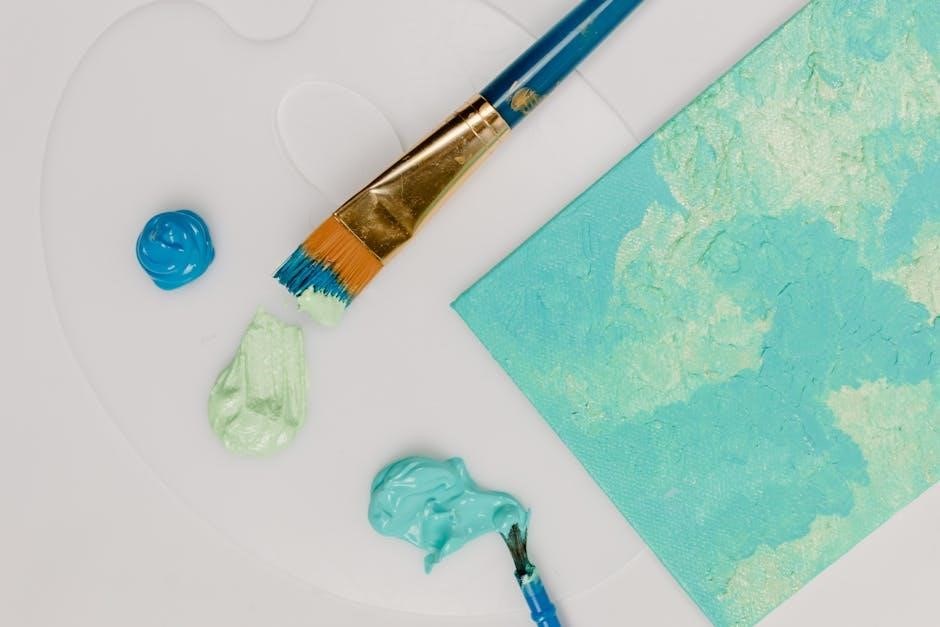
Watercolor brushes are essential tools, and tutorial PDFs frequently cover the diverse range of shapes and sizes available. Round brushes are versatile, ideal for detail work and washes, while flat brushes excel at broad strokes and creating sharp edges. Filbert brushes combine the benefits of both, offering rounded edges for soft blending.
Brush size impacts the scale of your work; smaller brushes are perfect for intricate details, while larger brushes cover expansive areas quickly. Many beginner watercolor painting tutorials recommend starting with a small, medium, and large round brush to gain familiarity with different techniques.
Understanding brush materials – synthetic versus natural hair – is also key, influencing water retention and paint flow. Resources will guide you in selecting brushes that complement your style.
Paper: Choosing the Right Surface
Watercolor painting tutorial PDFs emphasize the crucial role of paper quality. Watercolor paper is specifically designed to withstand water without buckling or falling apart. Weight is a key factor, measured in pounds (lbs) or grams per square meter (gsm); 140lb (300gsm) is a popular choice for beginners, offering a good balance of durability and affordability.
Paper texture also matters. Hot press paper is smooth, ideal for detailed work, while cold press paper has a textured surface, perfect for washes and granulation. Rough paper provides the most texture, creating dramatic effects.
Understanding paper composition – cotton versus wood pulp – impacts its absorbency and longevity. Cotton paper is superior, but more expensive.
Palette and Other Tools
Watercolor painting tutorial PDFs consistently highlight essential supplementary tools. A palette, whether plastic, ceramic, or disposable, is vital for mixing colors. White plastic palettes are common for their visibility. Beyond paints and brushes, consider a water container for cleaning brushes – two containers are ideal, one for rinsing, one for clean water.
Paper towels or a sponge are necessary for blotting excess water and controlling washes. Masking tape secures paper to a board, preventing buckling. A sketching pencil (HB or 2B) is useful for initial outlines, easily erased later.
Finally, a spray bottle helps re-wet paints and create interesting effects.
Basic Watercolor Techniques
Watercolor tutorial PDFs emphasize mastering wet-on-wet, wet-on-dry, color mixing, layering, and glazing for beautiful results and artistic expression!
Wet-on-Wet Technique
Watercolor tutorial PDFs frequently begin with the wet-on-wet technique, a foundational skill for achieving soft edges and blended colors. This involves applying wet paint to already dampened paper, allowing the pigments to flow and mingle organically.
The beauty of this method lies in its unpredictable nature, creating atmospheric effects and delicate washes. Beginners often find success with this technique as it’s forgiving and encourages experimentation. Tutorials demonstrate how controlling the amount of water on both brush and paper dictates the level of blending and diffusion.
Mastering wet-on-wet opens doors to painting skies, backgrounds, and creating ethereal textures. Practice is key to understanding how different colors interact when applied wet-on-wet, building a strong base for more complex watercolor paintings.
Wet-on-Dry Technique
Many watercolor tutorial PDFs emphasize the wet-on-dry technique as a contrasting method to wet-on-wet, offering greater control and precision. This involves applying wet paint to dry paper, resulting in sharp edges and defined shapes. It’s ideal for detailed work, layering, and creating crisp lines.
Beginners will find this technique straightforward, as it allows for more predictable outcomes. Tutorials often showcase how varying brush pressure and paint consistency impacts the final result. Mastering wet-on-dry is crucial for painting subjects requiring detail, like leaves or flower petals.
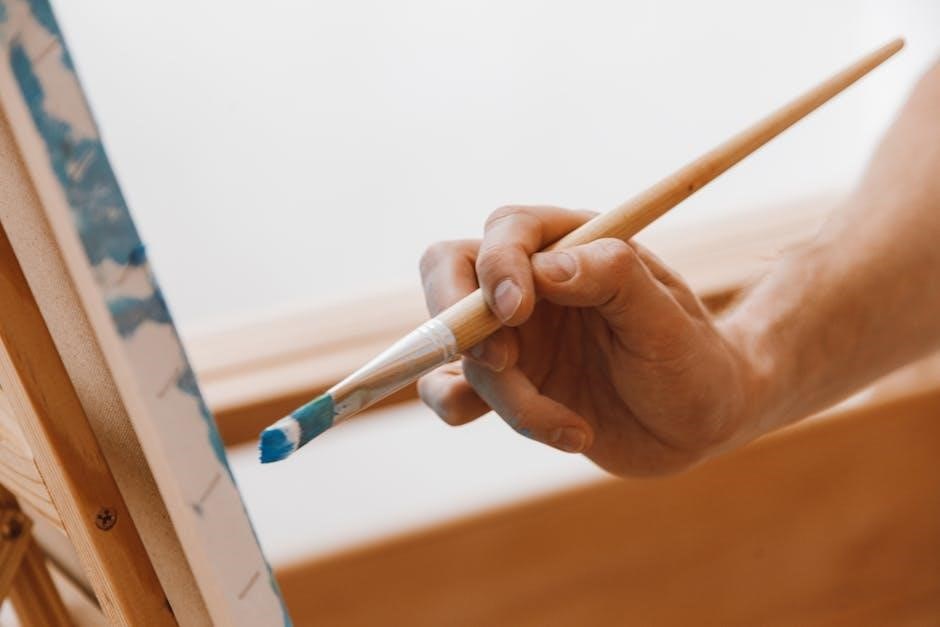
Successfully combining wet-on-wet and wet-on-dry techniques unlocks a wider range of expressive possibilities within watercolor painting, allowing artists to create dynamic and visually interesting compositions.
Color Mixing Fundamentals
Watercolor tutorial PDFs consistently highlight color mixing as a foundational skill. Understanding primary colors – red, yellow, and blue – is essential, as they form the basis for creating a vast spectrum of hues. Tutorials demonstrate how combining these primaries yields secondary colors: orange, green, and violet.
Beyond this, learning about color temperature (warm vs. cool) and value (lightness/darkness) is crucial. Many resources explain how to create tints by adding white (or water in watercolor) and shades by adding black or a complementary color.
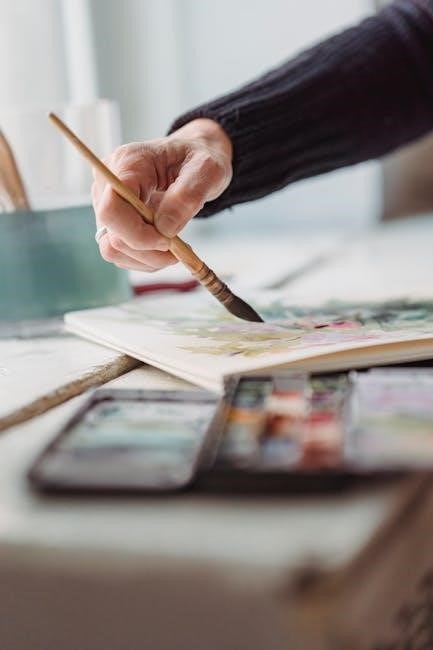
Experimentation is key; practice mixing colors to achieve desired results, referencing color wheels for guidance. Mastering color mixing unlocks creative control and allows for realistic or expressive color palettes.
Layering and Glazing
Watercolor tutorial PDFs frequently emphasize layering and glazing as techniques for depth and luminosity. Layering involves applying successive washes of color, allowing each to dry before adding the next, building up intensity and form gradually.
Glazing, a specific type of layering, uses transparent washes to modify underlying colors, creating subtle shifts and optical mixtures. These techniques are vital for achieving realistic effects and complex color variations.
Tutorials demonstrate how to control water content to prevent lifting previous layers and achieving smooth transitions. Practice is essential to master the delicate balance between transparency and coverage, unlocking watercolor’s unique expressive potential.
Finding Free Watercolor Tutorials & PDFs
Watercolor tutorial PDFs and online resources abound for beginners, offering step-by-step guidance and downloadable content to unlock your artistic potential today!
Online Resources for Beginners
Embarking on your watercolor journey is easier than ever with a wealth of free online resources specifically designed for beginners. Numerous platforms offer comprehensive watercolor painting tutorial PDFs and video lessons, providing a solid foundation in essential techniques.
Amyvsnelling Illustration stands out as a fantastic starting point, boasting 23 free tutorials that cover everything from basic techniques to troubleshooting common mistakes. These resources empower you to confidently explore the medium and unlock its creative potential.
Beyond individual blogs, platforms like YouTube and Skillshare host countless watercolor tutorial PDFs and video demonstrations. These resources cater to diverse learning styles, allowing you to learn at your own pace and focus on areas where you need the most guidance. Don’t hesitate to explore and experiment!
Recommended Free PDF Tutorials
Dive into the world of watercolor with readily available, free PDF tutorials! Amyvsnelling Illustration offers an exceptional 11-page FREEBIE, a perfect foundation for beginners eager to explore modern watercolor painting. This downloadable resource provides a structured learning path, covering fundamental techniques and concepts.
Searching online will reveal numerous other watercolor painting tutorial PDFs, often accompanying blog posts or online courses. These PDFs frequently detail specific projects, like painting leaves or flowers, offering step-by-step instructions and visual aids.
Look for tutorials focusing on core skills – color mixing, wet-on-wet, and layering – to build a strong skillset. Remember to download and save these resources for convenient, offline access during your practice sessions!
Utilizing Blog Tutorials (Amyvsnelling Illustration)
Amyvsnelling Illustration’s blog is a treasure trove of free watercolor painting tutorial resources, offering a fantastic starting point for beginners. Beyond the comprehensive 11-page FREEBIE PDF, the blog features numerous individual tutorials covering diverse techniques and projects.
These blog posts often include detailed written instructions, accompanied by high-quality images demonstrating each step. Explore tutorials on foundational skills like color mixing and brush control, as well as more advanced explorations like combining watercolor with ink, gesso, or collage elements.
The blog’s structure allows for a progressive learning experience, building skills gradually. Don’t hesitate to experiment and adapt the techniques to your own creative vision!
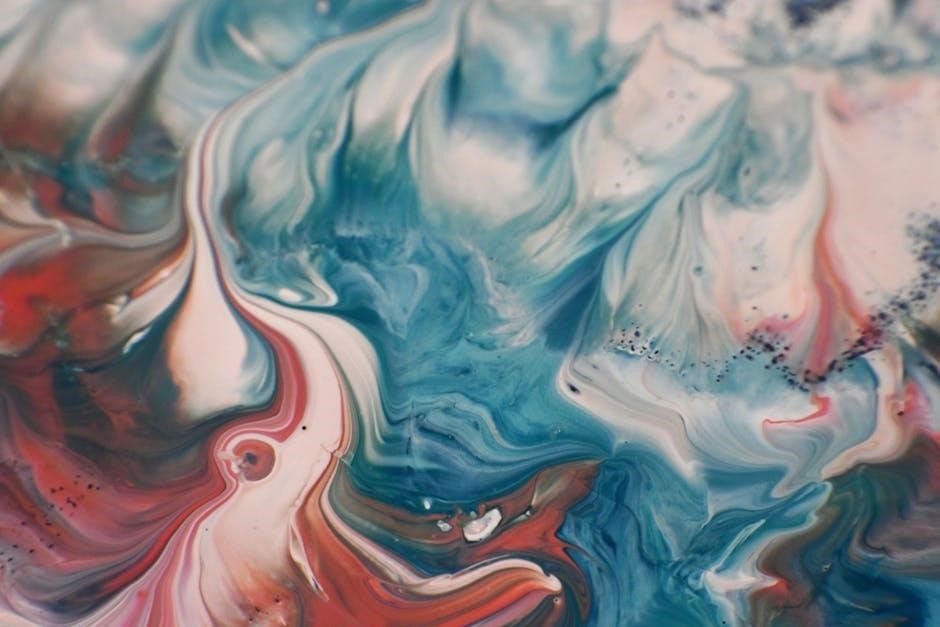
Watercolor Projects for Beginners
Download a FREE PDF and practice simple leaves and flowers! Explore watercolor with ink, gesso, and collage for exciting beginner projects.
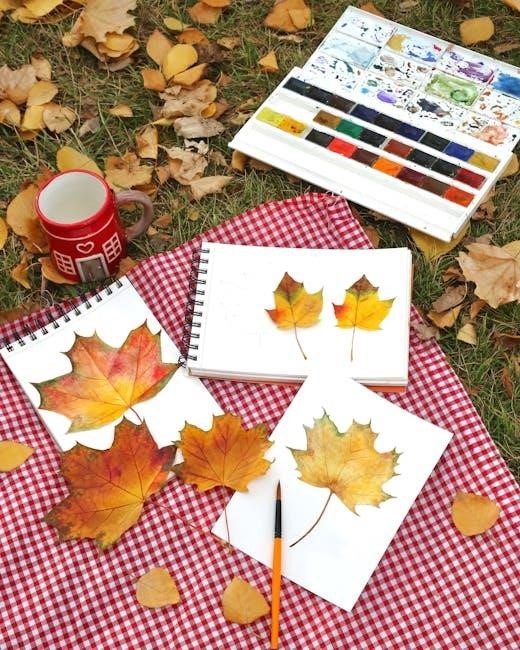
Painting Simple Leaves
Beginners can easily learn to paint captivating leaves with readily available watercolor tutorials and downloadable PDF guides. These resources break down the process into manageable steps, focusing on basic techniques like wet-on-wet and layering.
Start by sketching a simple leaf shape, then apply a light wash of green, allowing colors to blend naturally. Experiment with different shades to create depth and dimension, mimicking the natural variations found in foliage.
The provided watercolor painting tutorial PDF will guide you through adding veins and subtle details, enhancing the realism of your leaves. Don’t be afraid to practice – repetition is key to mastering this fundamental skill!
These projects offer a fantastic foundation for further watercolor exploration.
Painting Basic Flowers
Watercolor painting tutorials and downloadable PDFs offer a fantastic starting point for aspiring artists eager to paint beautiful, basic flowers. These resources simplify the process, breaking down complex shapes into manageable steps, perfect for beginners.
Begin with a light pencil sketch of your chosen flower, then apply delicate washes of color, building layers to achieve depth and vibrancy. Experiment with different color combinations to capture the unique hues of various blooms.
The watercolor tutorial PDF will demonstrate techniques for creating petals, adding shadows, and defining the flower’s center. Practice these skills, and you’ll quickly blossom into a confident floral artist!
These projects build a strong foundation for more advanced watercolor techniques.
Exploring Watercolor with Ink
Watercolor and ink create stunning contrasts and intricate details, and a watercolor painting tutorial PDF can guide you through this exciting combination. These resources demonstrate how to seamlessly blend the fluidity of watercolor with the precision of ink.
Start by applying light watercolor washes as a base, then use ink pens – fine liners or brush pens – to outline shapes, add textures, and create bold accents. Experiment with different ink colors and line weights to achieve varied effects.
The PDF tutorials will showcase techniques for layering ink over watercolor, creating interesting patterns, and adding expressive linework. This method adds depth and character to your artwork!
It’s a fantastic way to elevate your watercolor skills.
Watercolor with Gesso and Collage
Watercolor painting tutorial PDFs often explore mixed media techniques, and combining watercolor with gesso and collage is incredibly rewarding. Gesso provides a textured surface for watercolor to grip, allowing for unique effects and preventing the paper from becoming overly saturated.
Apply gesso in layers, creating raised areas or interesting patterns. Once dry, watercolor will beautifully interact with the texture. Incorporate collage elements – paper scraps, fabric, or found objects – to add visual interest and depth to your artwork.
These tutorials demonstrate how to adhere collage materials securely and seamlessly integrate them with watercolor washes. Experiment with different textures and layering techniques to create truly unique and expressive pieces!
It’s a fantastic way to expand your artistic horizons.
Advanced Techniques & Resources
Download resources like acrylic sheet guides and transfer directions to elevate your watercolor skills and explore mixed media possibilities!
Acrylic Sheets for Mixed Media
Acrylic sheets offer a fantastic surface for experimenting with watercolor in mixed media projects, providing a smooth, non-absorbent base unlike traditional paper.
This allows for unique layering effects and the ability to lift and manipulate watercolor without damaging the support. You can build up textures and combine watercolor with other mediums like inks, acrylics, and collage elements.
For beginners, using acrylic sheets can be less intimidating than working on watercolor paper, as mistakes are easily corrected. Download guides detailing how to prepare and utilize these sheets effectively, unlocking new creative avenues in your watercolor practice. Explore the possibilities and expand your artistic horizons!
Acrylic Transfer Directions
Acrylic transfer is a captivating technique to incorporate images and text into your watercolor paintings, adding depth and personalized elements to your artwork.
This process involves printing an image onto acrylic medium, allowing it to dry, and then transferring it onto a suitable surface – like watercolor paper or an acrylic sheet. Download detailed instructions for optimal results, ensuring a clean and crisp transfer every time.
Experiment with different images and layering techniques to create unique mixed media pieces. Combine this method with watercolor washes and details for stunning visual effects. It’s a fantastic way to personalize your art and explore new creative boundaries!