Mary Oliver’s “Wild Geese”: A Comprehensive Exploration
Exploring access to “Wild Geese” necessitates understanding PDF availability, legal download sources, and the crucial role of supporting local bookstores
in preserving literary freedom.
Today is 12/25/2025 02:05:51 ()
“Wild Geese,” penned by the celebrated poet Mary Oliver, stands as a cornerstone of contemporary American poetry, resonating deeply with readers seeking solace and self-acceptance. The poem, frequently encountered in digital formats like PDFs, offers a powerful message about belonging and finding one’s place within the vastness of the natural world;
Its enduring appeal stems from Oliver’s ability to articulate universal human experiences – feelings of isolation, inadequacy, and the yearning for connection – with remarkable clarity and grace. The poem doesn’t directly address the format of its distribution, such as PDF accessibility, but its themes become even more poignant when considering the ease with which it can be shared and discovered online.
Accessing “Wild Geese” through a PDF allows for convenient study and reflection, yet it’s vital to acknowledge the importance of supporting the literary ecosystem through legitimate sources. The poem’s message of acceptance is amplified by recognizing the value of ethical access to literature, mirroring the poem’s call to embrace one’s true self.
II. The Poem’s Publication and Context (1986, Dream Work)
“Wild Geese” first graced the literary landscape in 1986, appearing within Mary Oliver’s highly acclaimed collection, Dream Work. This period in Oliver’s career marked a deepening exploration of nature’s capacity to offer both profound insight and emotional healing, themes central to the poem’s enduring power.
The context of its publication is relevant when considering the poem’s accessibility today, particularly through digital means like PDFs. While the original publication was a physical book, the advent of digital technology has broadened its reach, allowing countless readers to encounter its message. However, the ease of PDF distribution also raises questions about copyright and ethical sourcing.
Understanding the original publication within Dream Work highlights Oliver’s artistic intent, while acknowledging the modern PDF format underscores the poem’s continued relevance and the evolving ways we engage with literature. Supporting legitimate sources ensures continued access and honors the author’s creative work.
III. Overview of the Poem’s Themes
“Wild Geese” resonates deeply with readers due to its exploration of universal themes: belonging, the instructive power of the natural world, and the acceptance of self, imperfections and all. The poem gently challenges the notion that one must earn a place in the world, asserting that simply being is enough.
The geese themselves symbolize a freedom born from embracing one’s true nature, unburdened by societal expectations. This message is particularly poignant in a digital age where curated online personas often overshadow authenticity. Accessing the poem via PDF, while convenient, shouldn’t diminish the appreciation for its core message.
Ultimately, “Wild Geese” is a call to self-compassion and a reminder that the universe extends grace to all, regardless of perceived flaws. Its themes remain powerfully relevant, prompting reflection on our relationship with ourselves and the world around us.
III.A. Belonging and Acceptance
The central theme of belonging in “Wild Geese” is powerfully conveyed through the image of the geese themselves, effortlessly claiming their space in the world. Oliver suggests that this inherent right to exist isn’t conditional; it’s simply a matter of being alive.
The poem directly addresses someone feeling lost or disconnected, offering a radical acceptance that transcends self-judgment. Whether encountered in a printed anthology or a readily available PDF, the message remains consistent: you already belong.
This acceptance isn’t passive; it’s an invitation to join the natural world, to recognize oneself as part of a larger, indifferent, yet ultimately welcoming universe. Supporting independent bookstores, where physical copies are found, reinforces access to this vital message of self-worth.
III.B. The Natural World as Teacher
“Wild Geese” positions the natural world not merely as a backdrop, but as a profound teacher offering lessons in acceptance and freedom. The geese, in their unselfconscious existence, model a way of being that is free from the constraints of human anxieties.
Whether accessed through a downloaded PDF or a cherished book from a local bookstore, the poem emphasizes observing nature’s rhythms as a path to self-understanding. The universe, Oliver suggests, “doesn’t ask” for our justifications; it simply is.
This indifference isn’t cold, but liberating. It allows for a release from the pressure to constantly prove one’s worth. The poem, available in various formats, encourages us to learn from the wild, to find solace and guidance in the natural world’s unwavering presence.
III.C. Self-Worth and Imperfection
“Wild Geese” powerfully addresses the human struggle with self-worth, particularly in the face of perceived imperfections. The poem’s central message is a radical acceptance of oneself, flaws and all, mirroring the natural world’s unconditional embrace of its inhabitants.
Whether encountered through a readily available PDF or a physical copy sourced from independent bookstores, Oliver’s work challenges the notion that we must earn our place in the universe. The geese don’t need a reason to fly; they simply do.
This imagery suggests that our inherent value isn’t contingent on achievement or perfection. The poem invites us to relinquish self-judgment and find belonging, not by fixing ourselves, but by acknowledging our inherent worth, just as the wild geese do.
IV. Detailed Analysis of the Poem’s Stanzas
A close reading of “Wild Geese,” accessible through various PDF formats and championed by independent bookstores, reveals a carefully constructed progression of thought. The poem unfolds through four stanzas, each building upon the last to deliver its message of acceptance.
Initially, the speaker observes someone consumed by sorrow, disconnected from the natural world. This sets the stage for the introduction of the wild geese, symbols of freedom and unburdened existence. The subsequent stanzas broaden the scope, emphasizing the universe’s indifference to individual suffering.
Ultimately, the poem offers solace, urging the reader to return to the natural world and acknowledge their pain. The stanzas work in harmony, guiding the reader towards self-compassion and a recognition of their inherent place within the larger ecosystem.
IV.A. Stanza 1: Initial Observation and Disconnection
The opening stanza of “Wild Geese,” readily available in PDF versions from sources like the Poetry Foundation, immediately establishes a tone of empathetic observation. Oliver presents a figure “who does not see the hundreds of birds,” lost in their own internal world of sorrow and self-judgment.
This initial image highlights a profound disconnection – not just from nature, but from the possibility of solace and belonging. The speaker witnesses this individual telling themselves stories, likely narratives of inadequacy and shame. The stanza’s brevity and directness emphasize the immediacy of this pain.
The phrase “telling themselves stories” suggests a self-imposed isolation, a cycle of negative self-talk that prevents genuine connection. This sets the stage for the poem’s central argument: the need to break free from these limiting beliefs and embrace a more expansive perspective.
IV.B. Stanza 2: The Wild Geese’s Freedom and Acceptance
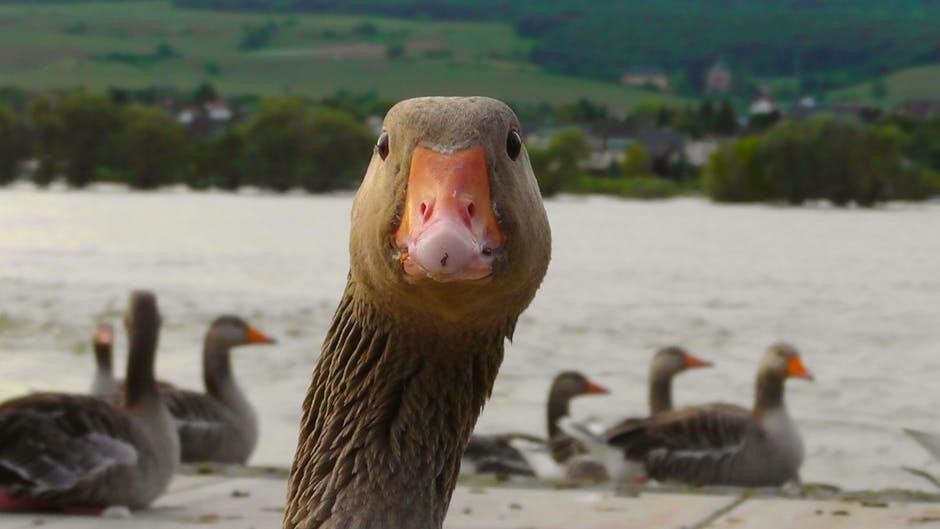
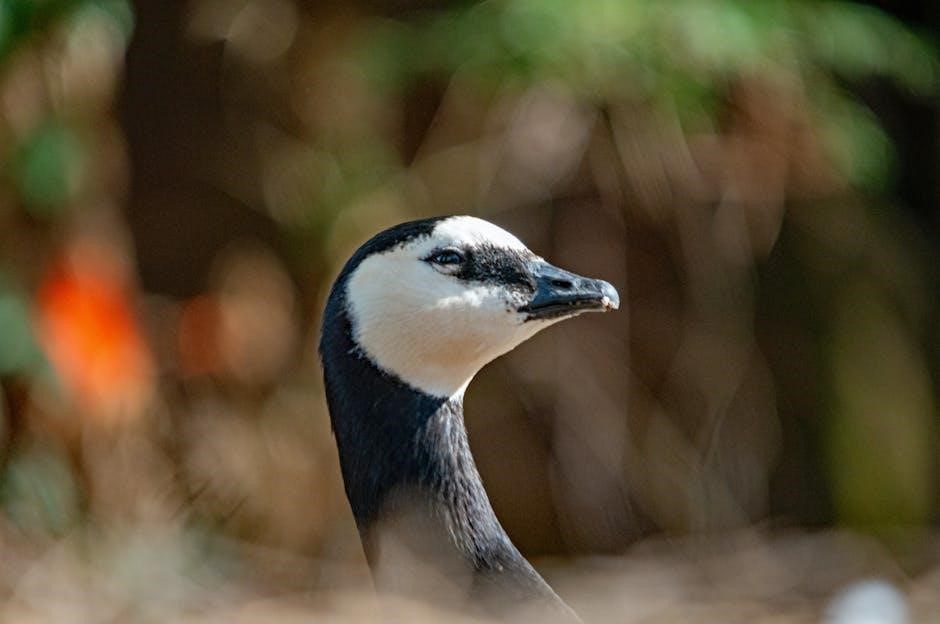
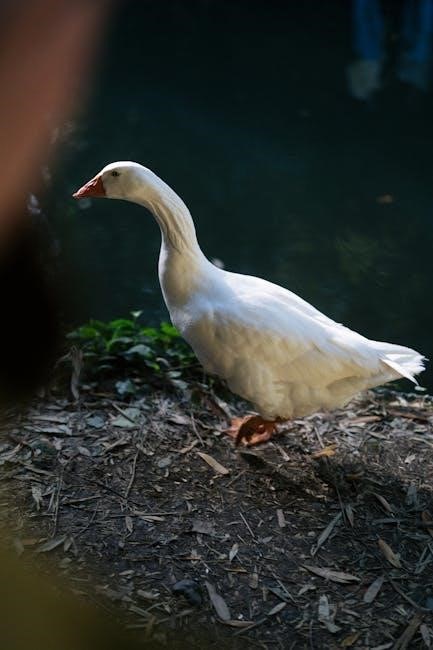
The second stanza, easily accessible within a “Wild Geese” PDF, dramatically shifts focus to the wild geese themselves, introducing a powerful contrast to the human suffering depicted earlier. Oliver describes them flying home, “honking” and settling into the trees, utterly unconcerned with human judgment or self-awareness.
Their actions are presented as natural, instinctive, and free from the burden of self-consciousness. The geese “have no intention of being anything other than what they are,” a statement that encapsulates the poem’s core message of radical acceptance.
This stanza emphasizes the inherent worth of simply being, without striving for perfection or seeking external validation. The geese’s effortless existence serves as a model for the speaker, and by extension, the reader, offering a path towards self-compassion and liberation.
IV.C. Stanza 3: The Call to Belong and the Universe’s Indifference
Found within any readily available “Wild Geese” PDF, the third stanza delivers the poem’s central invitation: “You do not have to be good.” This isn’t a dismissal of morality, but a liberating assertion that one’s inherent worth isn’t contingent upon achievement or virtue.
Oliver extends this acceptance further, stating that one doesn’t need to “walk where you haven’t been.” The universe, she emphasizes, “has no choice.” It will offer itself to you, regardless of your perceived flaws or shortcomings.
This stanza acknowledges the vastness and indifference of the natural world, yet frames this indifference not as a source of despair, but as a freeing realization. Belonging isn’t earned; it’s a fundamental right, offered unconditionally by the universe itself.
IV.D. Stanza 4: Acknowledging Pain and Seeking Solace in Nature
As readily apparent in any “Wild Geese” PDF, the final stanza offers a direct address to the reader experiencing sorrow. Oliver acknowledges the weight of pain, urging, “Tell me about your despair, and I will tell you mine.” This establishes a sense of shared human experience, a mutual recognition of suffering.
However, the stanza doesn’t dwell on the despair itself. Instead, it swiftly pivots to the restorative power of the natural world. Both humans and wild geese have the same right to occupy space, to simply be within the landscape.
The concluding lines, “Meanwhile the world goes on,” emphasize the cyclical nature of life and the enduring presence of beauty even amidst personal turmoil. Nature provides a constant, grounding force, offering solace and perspective.
V. Poetic Devices Employed in “Wild Geese”
Analyzing a “Wild Geese” PDF reveals Oliver’s masterful use of poetic devices to convey her message. The poem is rich in imagery, vividly depicting the natural world – the geese, the marsh, the sky – engaging multiple senses. This sensory detail immerses the reader in the poem’s setting.
Metaphorically, the wild geese themselves symbolize freedom, acceptance, and a natural way of being. They represent a life lived without the constraints of self-judgment; Oliver’s tone is largely contemplative and reassuring, offering a gentle invitation to self-compassion.
Furthermore, the poem’s frequent use of enjambment – the continuation of a sentence or phrase from one line to the next – creates a flowing, conversational rhythm, mirroring the natural movement of the geese. The free verse structure reinforces this sense of organic freedom.
V.A. Imagery and Sensory Detail
A “Wild Geese” PDF allows close examination of Oliver’s evocative imagery. The poem immediately establishes a vivid scene: “Someone tells you it is paradise.” This sets a tone of potential beauty, contrasted with the speaker’s initial disconnection. The marsh is described with tactile detail, inviting the reader to feel its dampness and stillness.
Oliver masterfully employs visual imagery, painting pictures of the geese in flight – “They honk their way into time,” creating a sense of movement and the passage of years. Auditory details, like the geese’s honking, further immerse us in the natural soundscape.
The poem’s strength lies in its ability to engage multiple senses, fostering a deep connection between the reader and the natural world, ultimately reinforcing the poem’s central themes.
V.B. Metaphor and Symbolism (Wild Geese as a Symbol)
Accessing a “Wild Geese” PDF facilitates deeper analysis of its symbolic layers. The wild geese themselves function as a powerful metaphor for freedom, acceptance, and belonging. Their effortless flight represents a release from self-imposed constraints and societal expectations.
The geese’s acceptance of their own wildness symbolizes the importance of embracing one’s true self, imperfections and all. They don’t question their place in the world; they simply are. This contrasts sharply with the speaker’s initial feelings of alienation.
The marsh itself can be interpreted as a symbol of the subconscious, a place of hidden depths and untamed emotions. Oliver uses these symbols to convey a message of hope and self-acceptance, urging readers to find solace in the natural world.
V.C. Tone and Mood (Contemplative, Reassuring)
A readily available “Wild Geese” PDF allows for repeated readings, enhancing appreciation of its subtle tonal shifts. The poem’s tone is predominantly contemplative, inviting introspection and a quiet examination of one’s place in the universe. Oliver doesn’t offer easy answers, but rather encourages a gentle turning inward.
Despite addressing feelings of loneliness and despair, the overall mood is remarkably reassuring. The image of the wild geese, accepting their existence without judgment, instills a sense of peace and possibility. This reassurance isn’t forceful, but rather a quiet offering of hope.
Oliver achieves this through careful word choice and imagery, creating a space where vulnerability is not only permitted but celebrated. The poem’s calming effect is a testament to her skill as a poet and her deep connection to the natural world.
V.D. Use of Enjambment and Free Verse
Accessing a “Wild Geese” PDF reveals the poem’s structural choices, notably its embrace of free verse and frequent enjambment. Oliver deliberately avoids traditional rhyme schemes and metrical patterns, allowing the language to flow naturally, mirroring the organic rhythms of the natural world she depicts.
Enjambment – the continuation of a sentence or phrase from one line to the next – is a key feature, creating a sense of momentum and breathlessness. This technique prevents the poem from feeling static or overly structured, encouraging a more fluid reading experience.
The lack of rigid form reinforces the poem’s central message of acceptance and freedom. Oliver’s stylistic choices contribute to a conversational, intimate tone, drawing the reader into the poem’s contemplative space. The PDF format allows close study of these subtle, yet powerful, techniques.
VI. The “Wild Geese” PDF and its Accessibility
Finding a “Wild Geese” PDF is relatively straightforward, with numerous online sources offering the poem for free. The Poetry Foundation and the Academy of American Poets websites are reputable platforms providing accessible PDFs of Oliver’s work, including this iconic piece.
However, users should exercise caution regarding download sources, ensuring they are legitimate to avoid potential malware or copyright infringement. While sharing for personal educational use is generally accepted, distributing unauthorized copies is legally problematic.
Educational platforms often integrate PDFs into course materials, offering students convenient access. Supporting local, independent bookstores remains vital for ensuring continued access to literature and combating censorship, even when digital copies are readily available.
VI.A. Common Sources for the PDF (Poetry Foundation, Academy of American Poets)
The Poetry Foundation’s website consistently ranks as a primary source for accessing “Wild Geese” in PDF format. Their digital library offers a clean, easily navigable interface, providing high-quality versions of Oliver’s poems, suitable for both reading online and downloading for offline access.
Similarly, the Academy of American Poets website provides a readily available PDF of “Wild Geese,” alongside biographical information about Mary Oliver and insightful analyses of her work. Both organizations prioritize making poetry accessible to a broad audience.
These platforms are generally considered legally sound sources, offering PDFs with appropriate copyright permissions. Utilizing these resources ensures readers are engaging with the poem ethically and supporting organizations dedicated to promoting poetry.
VI.B. Legality and Ethical Considerations of PDF Downloads

Downloading “Wild Geese” as a PDF raises important questions regarding copyright and ethical access to literary works. While many sources offer the poem for free, it’s crucial to ensure these downloads are authorized and respect Mary Oliver’s intellectual property rights.
Unofficial websites and file-sharing platforms often host PDFs without proper licensing, constituting copyright infringement. Supporting authors and publishers necessitates obtaining PDFs from legitimate sources like the Poetry Foundation or the Academy of American Poets.
Ethically, prioritizing legal downloads demonstrates respect for the creative process and contributes to the sustainability of the literary ecosystem. Consider purchasing collections of Oliver’s work to further support her legacy and the broader poetic community.
VI.C. Availability on Educational Platforms
Educational institutions frequently provide access to “Wild Geese” through licensed digital resources, offering students and educators legitimate PDF versions for study and analysis. Platforms like JSTOR, Project MUSE, and university library databases often include Oliver’s poetry within broader collections.
Many high school and college courses utilize “Wild Geese” in literature curricula, making PDFs readily available through learning management systems (LMS) such as Canvas or Blackboard. These platforms ensure copyright compliance and controlled distribution.
Teachers often share PDFs directly with students, adhering to fair use guidelines for educational purposes. Exploring your school or university’s digital library is a reliable way to access the poem legally and ethically, supporting academic engagement with Oliver’s work.
VII. Interpretations and Critical Reception
Critical reception of “Wild Geese” consistently highlights its accessibility and profound message of self-acceptance, resonating deeply with readers seeking solace and connection. Interpretations often center on the poem’s invitation to relinquish self-judgment and embrace one’s place within the natural world.
Feminist readings explore the poem’s challenge to patriarchal expectations, suggesting the “you” addressed is burdened by societal constraints and finds liberation in identifying with the wild geese’s freedom. Ecological interpretations emphasize Oliver’s reverence for nature and its capacity for healing.
The poem’s enduring popularity is reflected in its widespread inclusion in anthologies and online resources, including readily available PDFs, fostering continued discussion and analysis of its themes. Its simplicity belies a complex exploration of belonging and the human condition.
VII.A. Feminist Readings of the Poem
Feminist interpretations of “Wild Geese” frequently examine the poem’s address to a “you” perceived as burdened by societal expectations, particularly those imposed upon women. The poem’s call to “tell me your pains” can be read as an invitation to voice experiences historically silenced or marginalized.
The wild geese themselves symbolize a freedom from constraint, a natural state unburdened by patriarchal judgment. Their acceptance of their own wildness offers a counter-narrative to societal pressures for conformity. Access to the poem, often through readily available PDFs, amplifies these voices.
Critics suggest Oliver subtly critiques the internalized self-criticism often fostered by patriarchal structures, advocating for self-compassion and a rejection of unattainable ideals. The poem’s accessibility encourages wider engagement with these feminist perspectives.
VII.B. Ecological Interpretations and Environmental Themes
Ecological readings of “Wild Geese” emphasize the poem’s profound connection to the natural world, portraying nature not merely as a backdrop, but as an active participant in the process of healing and self-discovery. The geese embody a wildness that exists independently of human judgment, highlighting the intrinsic value of all living things.
The poem’s message of belonging extends beyond the human realm, suggesting that we are all interconnected parts of a larger ecosystem. Accessing the poem via PDF formats facilitates wider dissemination of this crucial environmental message.
Oliver’s work consistently advocates for a reverence for nature, and “Wild Geese” serves as a powerful reminder of our responsibility to protect the planet. The poem’s enduring popularity underscores a growing ecological consciousness.
VII.C. Psychological Perspectives on Self-Acceptance
From a psychological standpoint, “Wild Geese” offers a potent message of self-acceptance and the alleviation of suffering. The poem encourages readers to acknowledge their pain and imperfections, recognizing that these are inherent parts of the human experience. The geese’s unconcerned acceptance of their own existence provides a model for self-compassion.
The poem’s accessibility through PDF formats allows for repeated engagement with its therapeutic themes, offering solace to those struggling with self-doubt or feelings of inadequacy. It validates the experience of being “lost” or disconnected.
Oliver’s gentle tone and reassuring imagery create a safe space for introspection, fostering a sense of inner peace and belonging. The poem’s enduring appeal speaks to a universal human need for acceptance and understanding.
VIII. “Wild Geese” in Popular Culture and Education
“Wild Geese” frequently appears in literature courses and poetry anthologies, often used to initiate discussions about nature, self-discovery, and emotional resilience. Its concise form and accessible language make it ideal for introducing students to poetic analysis.
The poem’s themes resonate across various media, inspiring references in music, art, and even therapeutic practices. The widespread availability of the poem as a PDF enhances its reach, facilitating its inclusion in educational materials and personal collections.
Its enduring relevance in modern society stems from its timeless message of self-acceptance, particularly valuable in a culture often focused on achievement and perfection. Supporting independent bookstores ensures continued access to such vital literary works.
VIII.A. Use in Literature Courses and Anthologies
“Wild Geese” is a staple in many high school and college literature courses, frequently appearing in poetry anthologies due to its accessibility and profound themes. Educators utilize the poem to spark discussions on nature writing, self-acceptance, and the human condition.
The poem’s relatively short length and straightforward language make it an excellent entry point for students beginning their exploration of poetry analysis. PDF versions of “Wild Geese” are commonly distributed as course materials, facilitating close reading and annotation.
Its inclusion in curricula often prompts students to consider Oliver’s broader poetic style and the influence of Transcendentalist thought. Supporting local bookstores ensures continued access to these essential literary resources.
VIII.B. References in Music, Art, and Other Media
While direct references are less common, the spirit of Mary Oliver’s “Wild Geese” – particularly its themes of acceptance and finding solace in nature – resonates across various artistic mediums. Musicians and visual artists often draw inspiration from Oliver’s work, though not always explicitly citing the poem.
The poem’s message of self-compassion has found its way into contemporary song lyrics and visual art installations, promoting mindfulness and emotional well-being. PDF copies of “Wild Geese” are sometimes shared within artistic communities as a source of inspiration.
The poem’s enduring relevance suggests a subtle but pervasive influence on modern creative expression, fostering a deeper connection with the natural world and inner peace. Supporting independent bookstores helps sustain this cultural exchange.
VIII.C. The Poem’s Enduring Relevance in Modern Society
In an era marked by anxiety and disconnection, Mary Oliver’s “Wild Geese” offers a powerful antidote – a gentle reminder of belonging and self-acceptance. The poem’s message resonates deeply with contemporary audiences grappling with societal pressures and personal struggles.
Accessibility to the poem, including through PDF versions available online, amplifies its reach and impact. Supporting local bookstores ensures continued access to literature that fosters empathy and understanding. The poem’s call to embrace imperfection feels particularly relevant in a culture obsessed with curated perfection.
“Wild Geese” provides solace and encourages a mindful connection with the natural world, offering a pathway to inner peace amidst the chaos of modern life. Its timeless wisdom continues to inspire and uplift.
IX. Mary Oliver’s Broader Poetic Style and Influences
Mary Oliver’s poetic voice, deeply rooted in observation of the natural world, extends beyond “Wild Geese,” showcasing a consistent focus on spirituality and the interconnectedness of all things. Her style, characterized by accessible language and profound insight, draws clear parallels to Transcendentalist writers like Emerson and Thoreau.
The influence of Walt Whitman is also evident in Oliver’s expansive embrace of nature and her celebration of the individual. Accessing her work, even through a simple PDF of “Wild Geese,” reveals a consistent thematic thread.
Supporting local bookstores is vital for preserving access to Oliver’s complete oeuvre. Her poems consistently invite readers to find solace and meaning in the everyday, a testament to her enduring legacy.
IX.A. Connection to Transcendentalism (Emerson, Thoreau)
Mary Oliver’s poetry resonates deeply with the core tenets of Transcendentalism, particularly the emphasis on individual intuition and the inherent goodness of nature. Like Emerson and Thoreau, Oliver finds spiritual truth not in organized religion, but in direct experience of the natural world. A PDF copy of “Wild Geese” readily illustrates this connection.
Her focus on self-reliance and the importance of living deliberately echoes Thoreau’s philosophy. Supporting local bookstores ensures continued access to these vital literary connections. Oliver’s poems, much like Transcendentalist essays, urge readers to break free from societal constraints and embrace authenticity.
The poem’s call to “tell me your pains” aligns with the Transcendentalist belief in the inherent worth of the individual and the power of honest self-expression.
IX.B. Influence of Walt Whitman and American Romanticism
Mary Oliver’s expansive embrace of the natural world and her free verse style clearly demonstrate the influence of Walt Whitman. Like Whitman, Oliver celebrates the common and the overlooked, finding divinity in everyday experiences. Accessing a “Wild Geese” PDF reveals this democratic spirit in her poetic voice.
Her work also aligns with the broader tenets of American Romanticism, prioritizing emotion, imagination, and the sublime power of nature. Supporting independent bookstores is crucial for preserving access to these foundational literary influences; Oliver’s poems, similar to those of the Romantics, offer a refuge from the industrializing world.
The poem’s lyrical quality and its focus on individual perception are hallmarks of the Romantic tradition, beautifully captured within the verses of “Wild Geese.”
IX.C. Oliver’s Focus on Nature and Spirituality
Mary Oliver’s poetry consistently intertwines the natural world with profound spiritual inquiry. She doesn’t present nature as merely a backdrop, but as a direct pathway to understanding oneself and the universe. Downloading a “Wild Geese” PDF allows readers to intimately experience this connection.
Her work often eschews traditional religious dogma, instead finding reverence in the observable details of the natural world – a bird’s flight, the growth of a wildflower, the changing seasons. Local bookstores play a vital role in ensuring continued access to such spiritually resonant literature.
“Wild Geese” exemplifies this, offering solace and acceptance through the simple image of geese returning to the marsh, a testament to belonging and the universe’s inherent welcome.