
Large letter tracing worksheets, often available as PDF downloads, are foundational tools for early literacy․ They aid children in developing pre-writing skills and letter recognition․
These resources focus on building muscle memory and proper letter formation through repetitive practice, preparing young learners for handwriting success;
What are Large Letter Tracing Worksheets?
Large letter tracing worksheets are specifically designed educational resources featuring oversized letters for young children to practice handwriting․ Typically available as easily downloadable PDF files, these worksheets provide dotted or dashed outlines of uppercase and lowercase letters․
The primary goal is to guide a child’s pencil along the designated path, reinforcing correct letter formation․ These worksheets often include space for independent practice after the tracing portion․ They are a cornerstone in early childhood education, fostering fine motor skills and letter recognition, ultimately preparing children for successful writing endeavors․
Benefits of Using Large Letter Tracing Worksheets
Utilizing large letter tracing worksheets, often found as convenient PDF printables, offers numerous advantages for early learners․ The larger size aids in developing fine motor skills and hand-eye coordination, crucial for handwriting success․
These worksheets enhance letter recognition, build muscle memory for proper formation, and boost confidence in pre-writing abilities․ They provide a structured, engaging activity that prepares children for more complex writing tasks, fostering a positive attitude towards learning and literacy development․

Developmental Stages & Worksheet Appropriateness
Large letter tracing worksheets (PDF format) should align with a child’s developmental stage․ Progression from basic shapes to letter formation is key for effective learning․
Preschool & Pre-K (Ages 3-4) ― Focus on Basic Shapes
Large letter tracing worksheets for preschoolers (ages 3-4), often found as PDF printables, shouldn’t directly focus on letter formation․ Instead, emphasize pre-writing skills through shape tracing․
Worksheets should feature large, simple shapes like circles, squares, and lines․ This builds fine motor skills and hand-eye coordination – essential precursors to writing․
These activities prepare little hands for the more complex task of letter tracing later on, fostering confidence and a positive attitude towards learning․ Keep it playful and fun!
Kindergarten (Ages 5-6) ― Introducing Letter Formation
Large letter tracing worksheets, readily available as PDF downloads, are ideal for kindergarteners (ages 5-6) beginning to learn letter formation․ Focus on uppercase letters first, as they are generally easier to master․
Worksheets should feature dotted lines for tracing, with ample space for independent practice․ Introduce one letter at a time, reinforcing its sound and associating it with familiar objects․
Gradually transition to lowercase letters, continuing to emphasize proper stroke order and consistent practice․ Celebrate successes to build confidence!
First Grade (Ages 6-7) ― Reinforcing Letter Skills
Large letter tracing worksheets, often found as PDF printables, continue to benefit first graders (ages 6-7) by reinforcing established letter skills․ Transition to worksheets with less guidance, like fainter dotted lines or blank spaces for copying․
Introduce variations in letter styles (e․g․, cursive introductions) and focus on consistent letter sizing and spacing․ Incorporate worksheets that combine tracing with writing simple words․
Regular practice solidifies muscle memory and improves handwriting fluency, preparing students for more complex writing tasks․
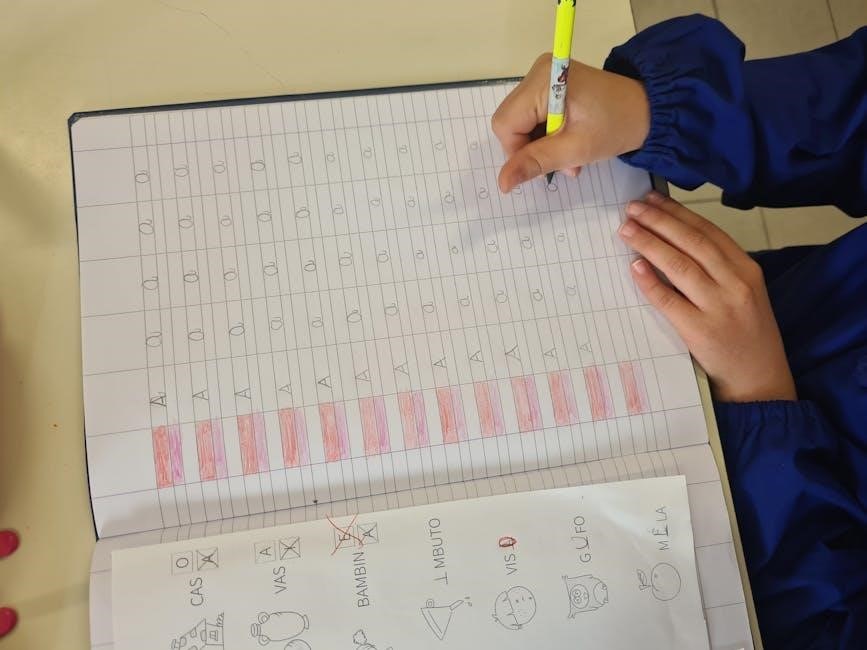
Types of Large Letter Tracing Worksheets
Large letter tracing worksheets, commonly in PDF format, vary in design․ Options include start-dot worksheets, arrow-guided tracing, and those featuring picture-letter associations for engagement․
Worksheets with Start Dots
Worksheets with start dots are a classic approach within large letter tracing worksheets, frequently found as PDF printables․ These worksheets present each letter with a prominent dot indicating the precise starting point for tracing․
This feature is particularly beneficial for beginners, as it removes the ambiguity of where to begin forming the letter, fostering correct muscle memory and reducing frustration․ The clear starting point guides the child’s pencil stroke, promoting accurate letter formation․
These are often the first type introduced, building confidence before progressing to more independent tracing methods․
Worksheets with Arrows Indicating Direction
Worksheets with arrows indicating direction, commonly available as large letter tracing worksheets PDF downloads, offer a more guided approach to letter formation․ These resources feature arrows along the letter’s path, visually demonstrating the correct stroke order․
This method is incredibly helpful for children who struggle with understanding the sequence of movements needed to create each letter․ The arrows provide a clear roadmap, reinforcing proper technique and preventing incorrect habits․
They build upon the foundation of start dot worksheets, adding another layer of support․
Worksheets with Picture Associations
Worksheets with picture associations, frequently found as large letter tracing worksheets PDF files, enhance learning by connecting letters to familiar objects․ Each letter is paired with an image whose name begins with that letter – for example, ‘A’ for apple or ‘B’ for ball․
This multi-sensory approach strengthens letter recognition and builds vocabulary simultaneously․ It makes the learning process more engaging and memorable for young children, fostering a positive association with literacy․
These worksheets are excellent for reinforcing phonics skills․

Creating & Finding Large Letter Tracing Worksheets (PDF)
Large letter tracing worksheets PDF options range from free online printables to paid, curated packs․ DIY creation using templates is also readily available for customization․
Free Printable Resources Online
Numerous websites offer free, downloadable large letter tracing worksheets in PDF format․ These resources are excellent starting points for parents and educators seeking budget-friendly options․ Sites like Education․com, K5 Learning, and Twinkl provide a variety of worksheets catering to different skill levels and learning styles․
Typically, these free resources include basic letter tracing exercises, often with dotted lines for guidance․ Many also offer themed worksheets featuring colorful illustrations to enhance engagement․ However, the quality and variety can vary, so previewing the worksheets before printing is recommended to ensure they align with your specific needs․
Paid Worksheet Packs & Bundles
For more comprehensive and professionally designed resources, consider paid worksheet packs and bundles in PDF format․ Platforms like Teachers Pay Teachers host a vast collection created by educators, offering diverse themes, skill focuses, and levels of difficulty․
These paid options often include additional features such as answer keys, progress tracking sheets, and differentiated instruction materials․ Bundles can provide significant value, offering a wide range of activities for a single price․ Investing in paid resources can save time and ensure high-quality, curriculum-aligned content․
DIY Worksheet Creation Tools & Templates

For personalized learning experiences, explore DIY worksheet creation tools and templates․ Several websites and software programs allow you to design custom large letter tracing worksheets in PDF format․ Canva and Microsoft Word offer user-friendly interfaces and pre-designed templates that can be easily modified․

These tools empower educators and parents to tailor worksheets to specific student needs and interests․ Creating your own resources allows for complete control over content and design, ensuring alignment with learning objectives and fostering creativity․

Tips for Effective Use
Utilize large letter tracing worksheets (PDF) with mindful practice․ Encourage correct pencil grip, provide gentle guidance, and keep sessions short and engaging for optimal results․
Choosing the Right Paper & Writing Tools
Selecting appropriate materials enhances the effectiveness of large letter tracing worksheets (PDF)․ Opt for paper with a slight texture to provide tactile feedback, aiding control․ Avoid overly thin paper that bleeds through with certain writing tools․
For beginners, thicker crayons or short, triangular pencils promote a proper tripod grip․ As skills develop, transition to standard pencils or fine-tipped markers․ Consider washable options for easy cleanup! Experiment to find what best suits the child’s hand size and developing motor skills, fostering a positive learning experience․
Supervision & Guidance for Young Learners
When using large letter tracing worksheets (PDF), initial supervision is crucial․ Guide young children on correct letter formation, emphasizing starting points and stroke direction․ Offer gentle corrections, focusing on encouragement rather than criticism․
Demonstrate proper pencil grip and posture․ Break down tasks into smaller steps, celebrating each milestone․ Patience is key! Gradually reduce direct assistance as the child gains confidence, fostering independence and a love for learning․ Positive reinforcement builds self-esteem and motivation․
Making it Fun & Engaging
Large letter tracing worksheets (PDF) don’t have to be dull! Transform practice into play by using colorful markers or crayons․ Incorporate themes the child enjoys – animals, vehicles, or favorite characters․
Turn it into a game: time how quickly they can complete a page, or offer small rewards for effort․ Play music! Create a comfortable and inviting learning environment․ Remember, a positive attitude makes all the difference, fostering a genuine enthusiasm for learning letters․

Addressing Common Challenges
Large letter tracing worksheets (PDF) can help overcome hurdles like reversals or poor grip․ Consistent practice, coupled with targeted exercises, builds confidence and skill․
Patience and positive reinforcement are key to navigating these common learning obstacles effectively․
Letter Reversals (b/d, p/q)
Letter reversals, particularly with b/d and p/q, are common in early writing development․ Large letter tracing worksheets (PDF) can specifically address this challenge by emphasizing distinct stroke order and visual cues․
Worksheets featuring directional arrows and highlighted starting points help children internalize the correct formation․ Multi-sensory approaches, like saying the letter sound while tracing, reinforce the distinction․ Consistent, focused practice with these PDF resources builds confidence and reduces these errors over time․
Remember to celebrate small victories and avoid frustration!
Pencil Grip & Fine Motor Skills
Large letter tracing worksheets (PDF) are excellent for developing essential fine motor skills and a correct pencil grip․ The larger size of the letters allows young children to practice control and coordination without the frustration of tiny spaces․
Focus on a tripod grip – thumb, index, and middle finger – and encourage relaxation․ PDF worksheets can include visual reminders of proper grip․ Consistent tracing strengthens hand muscles, improving handwriting readiness and overall dexterity․
Supplement with other fine motor activities like playdough or beads!
Maintaining Focus & Motivation
Large letter tracing worksheets (PDF) can be more engaging for young learners due to their size and visual appeal․ Keep sessions short and focused, preventing overwhelm․ Incorporate rewards or a sticker chart to motivate completion․
Vary the PDF worksheet types – with dots, arrows, or pictures – to maintain interest․ Make it a game! Time tracing sessions or turn it into a friendly competition․
Positive reinforcement and a relaxed atmosphere are key to fostering a positive learning experience․

Integrating Worksheets with Other Learning Activities
Large letter tracing worksheets (PDF) complement sensory tracing, letter games, and phonics․ This multi-sensory approach reinforces letter recognition and sound-letter correspondence effectively․
Sensory Tracing (Sand, Shaving Cream)
Sensory tracing beautifully extends the learning from large letter tracing worksheets (PDF)․ Instead of pencil and paper, children trace letters in tactile materials like sand, salt, or shaving cream․
This kinesthetic activity enhances muscle memory and letter recognition through a different sensory pathway․ The engaging texture provides a fun, multi-sensory experience, particularly beneficial for kinesthetic learners․ It reinforces the shapes learned on the worksheets, solidifying letter formation skills․
Consider using a shallow tray and guiding the child’s finger along the letter shape initially, then encouraging independent tracing․
Letter Recognition Games
Supplementing large letter tracing worksheets (PDF) with games boosts engagement and reinforces learning․ Simple games like “Letter Scavenger Hunt” – finding letters around the room – build recognition skills․
“Letter Matching” using flashcards or printed letters from worksheets encourages visual discrimination․ “I Spy” focusing on letter shapes adds an element of fun․ These activities transform learning into play, solidifying letter identification․
Adapt games to suit the child’s level, starting with a few letters and gradually increasing complexity․ Positive reinforcement is key!
Connecting Letters to Sounds (Phonics)
Integrating large letter tracing worksheets (PDF) with phonics is crucial for reading development․ As children trace letters, simultaneously introduce their corresponding sounds․ For example, while tracing “A”, emphasize the /a/ sound․
Use picture cards representing words starting with that letter – “apple” for “A”․ This multi-sensory approach links visual, kinesthetic, and auditory learning․
Simple blending exercises, like sounding out “c-a-t”, build decoding skills․ Consistent practice strengthens the letter-sound connection, paving the way for fluent reading․

PDF Format & Accessibility
Large letter tracing worksheets in PDF format offer portability and ease of printing․ They are widely compatible across devices, ensuring convenient access for learners․
PDFs maintain formatting, vital for clear tracing lines and consistent presentation․
Advantages of PDF Worksheets
Large letter tracing worksheets offered as PDF downloads present numerous benefits for educators and parents․ PDFs ensure consistent formatting across various devices – computers, tablets, and smartphones – eliminating display issues․
They are easily printable, allowing for tangible practice, and require no internet connection once downloaded․ This offline accessibility is invaluable․ Furthermore, PDFs are generally secure and prevent unintended alterations to the worksheet content, preserving the intended learning structure․
The widespread availability and compatibility of PDF readers make these resources incredibly convenient and accessible to a broad audience, fostering early literacy skills effectively․
Ensuring PDF Compatibility
To guarantee seamless access to large letter tracing worksheets in PDF format, it’s crucial to utilize widely supported PDF versions․ PDF/A standards are recommended for long-term archiving and reliable viewing․
Testing the PDF across different PDF readers – Adobe Acrobat Reader, Preview (Mac), and various browser plugins – is essential․ Embedding fonts within the PDF prevents substitution issues․
Optimizing the file size for faster downloads and printing is also beneficial․ Regularly updating PDF creation software ensures compatibility with evolving standards, maximizing accessibility for all users seeking effective early literacy resources․
Accessibility Considerations for Diverse Learners
When offering large letter tracing worksheets as PDFs, inclusivity is paramount․ Ensure sufficient contrast between letters and backgrounds for visually impaired learners․ Provide alternative text descriptions for images, aiding screen reader users․
Consider offering worksheets in multiple formats beyond PDF, like adaptable Word documents․
Clear, sans-serif fonts enhance readability for dyslexic students․ Allow keyboard navigation within the PDF․ Prioritizing these adjustments guarantees equitable access to foundational literacy skills for all children, fostering a supportive learning environment․