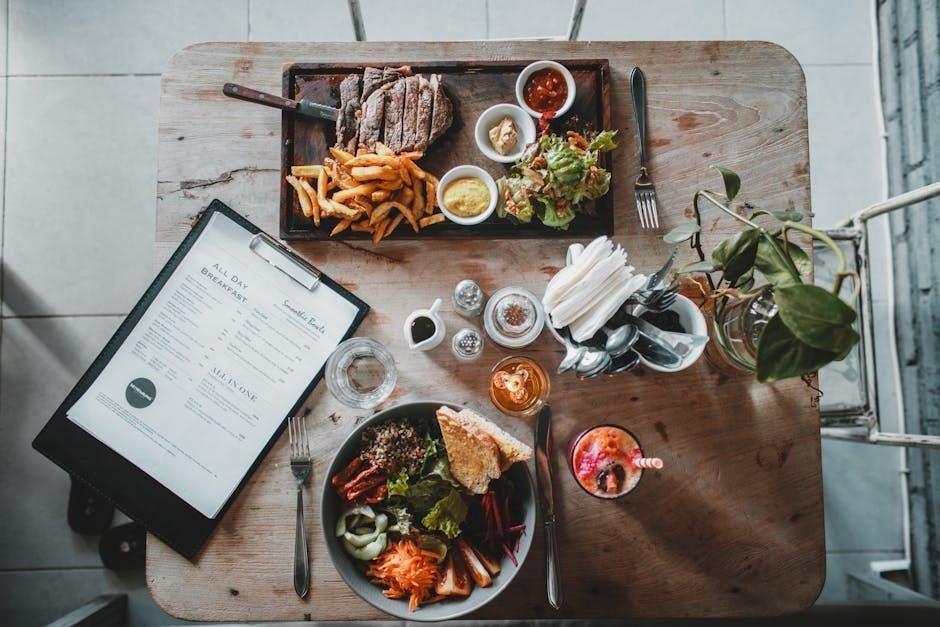
This PDF-based weekly menu offers nutritional guidance for managing diverticulitis, emphasizing fiber-rich foods and avoiding irritants like caffeine and spicy dishes.
Understanding Diverticulitis and Diet
Diverticulitis arises from small pouches forming in the colon wall, becoming inflamed or infected. Dietary management is crucial for symptom control and prevention of flare-ups. A specialized weekly menu, often delivered as a PDF, focuses on increasing fiber intake gradually to promote regular bowel movements.
Avoiding irritating foods – including spicy options, caffeine, and alcohol – is paramount. Smaller, more frequent meals are recommended, alongside thorough chewing and mindful eating. Adequate hydration, around 2.5 liters daily, supports digestive health and overall well-being. This approach aims to minimize strain on the colon.
The Role of a Weekly Meal Plan
A well-structured weekly meal plan, ideally in PDF format, simplifies dietary adherence for diverticulitis management. It removes the guesswork from daily food choices, ensuring consistent intake of beneficial nutrients and avoidance of triggering substances.
This proactive approach supports digestive health by promoting regular bowel movements and reducing inflammation. The plan typically incorporates lean proteins, whole grains, and cooked vegetables, distributed across 4-6 smaller meals. Rest after meals and slow, mindful eating are also key components, fostering optimal digestion and comfort.

Key Dietary Principles for Diverticulitis
Prioritize high-fiber foods, lean proteins, and adequate hydration (2.5 liters daily), while meticulously avoiding spicy foods, caffeine, and alcohol.

High-Fiber Intake: Benefits and Sources
A diet rich in fiber is crucial for managing diverticulitis, promoting regular bowel movements and reducing pressure within the colon. Soluble fiber, found in oats, barley, and fruits, softens stool, while insoluble fiber, present in whole grains and vegetables, adds bulk.
Gradually increase fiber intake to avoid discomfort. Excellent sources include fruits like apples and bananas, vegetables such as broccoli and carrots, and whole grains like brown rice and quinoa.
Fiber helps prevent constipation, a key factor in diverticulitis flare-ups, and supports overall digestive health.
Avoiding Irritating Foods: A Comprehensive List
Individuals with diverticulitis should avoid foods that can exacerbate symptoms and trigger flare-ups. This includes spicy foods, which can irritate the digestive tract, and caffeine, known to stimulate bowel activity. Alcohol consumption should also be restricted due to its potential to inflame the gut.
Furthermore, extremely hot or cold foods and beverages should be avoided. It’s vital to listen to your body and identify personal trigger foods, eliminating them from your diet.
Careful food selection is key to symptom management.
Small, Frequent Meals: Why They Matter
Consuming smaller, more frequent meals – ideally six times a day (breakfast, mid-morning snack, lunch, afternoon snack, dinner, and a bedtime snack) – is crucial for managing diverticulitis. This approach reduces the workload on the digestive system, preventing excessive pressure within the colon.
It allows for better nutrient absorption and minimizes irritation. Eating slowly and in a relaxed environment, coupled with thorough chewing, further aids digestion.
This strategy promotes gut comfort and reduces flare-up risk.

Sample Weekly Menu Structure (PDF Content)
The PDF presents a personalized, daily meal plan featuring lean proteins, whole grains, fruits, and vegetables, designed for frequent, small-volume meals.
Monday: Focus on Soluble Fiber
Monday’s menu prioritizes soluble fiber to gently support digestive health. Breakfast options include oatmeal or a banana with yogurt. Lunch suggestions feature a chicken and vegetable soup, ensuring easily digestible components. Dinner ideas revolve around baked fish with steamed carrots and a small portion of brown rice.
Remember to consume liquids in small amounts throughout the day, and chew food thoroughly. Resting after meals is also recommended. This day aims to introduce fiber gradually, promoting gut comfort and regularity.
Breakfast Options
Start your day with gentle nourishment! Consider a warm bowl of oatmeal prepared with water, avoiding dairy if sensitive. A ripe banana paired with plain yogurt offers soluble fiber and probiotics. Scrambled eggs, cooked softly, provide protein without being overly stimulating. Whole-wheat toast with a thin spread of avocado is another excellent choice.
Portion sizes should be small, and remember to eat slowly and chew thoroughly. Hydrate with water, sipping it gradually. These options prioritize easily digestible foods to begin the day comfortably and support digestive health.
Lunch Suggestions
For lunchtime, focus on lean protein and well-cooked vegetables. A small portion of grilled chicken or fish with steamed carrots and green beans is ideal. A lentil soup, made with broth and soft vegetables, provides fiber and is gentle on the system. Consider a turkey sandwich on white bread, removing the crust, with a light spread of avocado.

Avoid raw vegetables and large portions. Remember to chew thoroughly and sip water throughout the meal. These options offer balanced nutrition while minimizing digestive irritation, supporting comfortable digestion.
Dinner Ideas
Dinner should continue the theme of easily digestible foods. Baked or poached fish with mashed sweet potatoes and cooked spinach is a good choice. A small portion of ground turkey meatballs in a light tomato sauce, served with white rice, is also suitable. Chicken noodle soup, using a low-sodium broth and soft noodles, provides comfort and nourishment.
Avoid spicy sauces or heavily seasoned dishes. Prioritize smaller portions and remember to rest after eating. These dinners aim to provide essential nutrients without aggravating the digestive tract, promoting restful sleep.
Tuesday: Lean Protein and Cooked Vegetables
Tuesday’s focus is on easily digestible lean protein paired with well-cooked vegetables. This combination minimizes digestive stress while providing essential nutrients. Prioritize proteins like poached chicken breast or baked fish. Vegetables should be steamed, boiled, or baked – avoid raw options.
Consider carrots, green beans, or zucchini. Small portions are key, and remember to chew thoroughly. This dietary approach supports gut health and reduces the likelihood of flare-ups, aligning with diverticulitis management guidelines.
Start your day with gentle, fiber-soluble choices. Oatmeal prepared with water (not milk initially) is excellent, ensuring it’s well-cooked and soft. Scrambled eggs, made without added fats, provide protein without irritation. A small portion of peeled, cooked apple or banana is also suitable.
Avoid high-fat options like bacon or sausage. Remember to eat slowly and chew thoroughly. These breakfast ideas prioritize easy digestion and minimize strain on the digestive system, crucial for managing diverticulitis symptoms effectively.
For lunch, focus on lean protein and well-cooked vegetables. Consider a small portion of grilled or baked chicken breast with steamed carrots and green beans. A simple broth-based soup, avoiding spicy seasonings, is also a good choice. White rice, cooked until soft, provides easily digestible carbohydrates.
Avoid raw vegetables and salads initially. Portion control is key – smaller, more frequent meals are better tolerated. Remember to drink water between bites to aid digestion and maintain hydration throughout the day.
Dinner should continue the theme of easily digestible foods. Baked or poached fish, like cod or haddock, paired with mashed sweet potatoes and cooked spinach is a gentle option. A small serving of ground turkey with rice and well-cooked zucchini is also suitable.
Avoid fried foods and heavy sauces. Ensure all vegetables are thoroughly cooked to minimize digestive distress. Remember to eat slowly and rest after your meal. Prioritize hydration with small sips of water throughout the evening.
Wednesday: Incorporating Whole Grains
Today focuses on introducing well-cooked whole grains. Opt for quinoa or brown rice, ensuring they are soft and easy to digest. These provide valuable fiber without excessive irritation. Pair these grains with lean protein like baked chicken breast and steamed green beans.
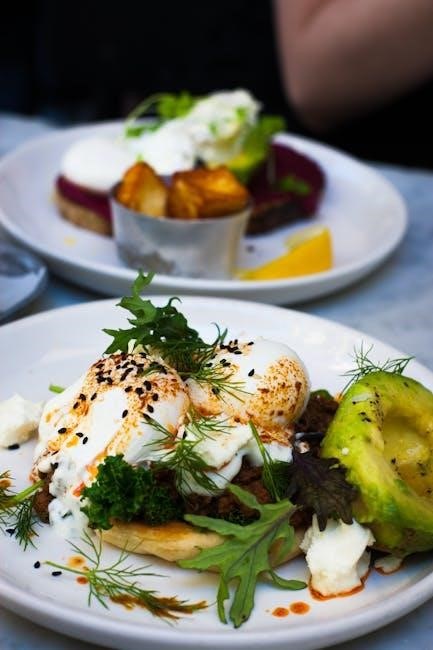
Remember to eat frequent, small meals – around 6 throughout the day. Thorough chewing and a relaxed dining environment are crucial. Maintain adequate hydration with approximately 2.5 liters of water daily, consumed in small amounts.
Start your day with easily digestible choices. Consider oatmeal made with water, ensuring it’s well-cooked and soft. A small portion of scrambled eggs provides protein without being overly stimulating. Alternatively, a ripe banana is gentle on the system. Avoid high-fiber cereals or those with added sugars.

Remember to eat slowly and chew thoroughly. Pair your breakfast with a small glass of water. Maintaining consistent meal times is beneficial. Avoid caffeine and citrus juices, as these can potentially irritate the digestive tract.
For lunch, opt for lean protein sources like poached or baked chicken breast, paired with well-cooked vegetables such as carrots or green beans. A small serving of white rice is easily digestible. Avoid raw vegetables and salads during a flare-up. Soups, particularly broth-based varieties, can be soothing and hydrating.
Keep portions small and focus on chewing your food thoroughly. Drink water between bites, rather than with the meal, to aid digestion. Avoid spicy seasonings or heavy sauces. A calm eating environment is also crucial for optimal digestion.
Dinner should consist of easily digestible proteins like fish (baked or steamed) and well-cooked, soft vegetables – think mashed potatoes or steamed squash. Whole grains, such as white rice or quinoa, are preferable to heavier options. Avoid fried foods and those with high fat content.
Remember to eat slowly and rest afterwards. Limit your intake to a moderate portion size. Avoid extremely hot or cold temperatures in your meal. Prioritize hydration with small sips of water throughout the evening, but not during dinner.
Thursday: Gentle on the Digestive System
Today’s focus is on minimizing digestive stress. Meals should be small, frequent, and easily absorbed. Prioritize liquids that are minimally stimulating to the gastrointestinal tract. Think clear broths or diluted juices. Chewing food thoroughly is crucial for aiding digestion and reducing discomfort.
Resting in a seated position for up to 30 minutes post-meal can also be beneficial. Avoid any foods known to trigger symptoms. Maintain adequate hydration throughout the day, sipping water between meals rather than with them.
Start the day with gentle, easily digestible choices. Consider oatmeal prepared with water, ensuring it’s well-cooked and soft. A small portion of scrambled eggs, prepared without added fats, is another suitable option. White toast with a thin spread of unsalted butter or a small amount of jam can also be included.
Avoid high-fiber cereals, fruits with skins, and large quantities of dairy. Sip on warm water or diluted herbal tea. Remember to eat slowly and chew thoroughly to aid digestion and minimize any potential discomfort.
For lunchtime, focus on lean protein and well-cooked vegetables. A small portion of grilled or baked chicken breast paired with steamed carrots and green beans is an excellent choice. Alternatively, consider a simple broth-based soup with noodles and soft vegetables, avoiding any spicy seasonings.
White rice is preferable to brown rice during a flare-up. Ensure portions are moderate and eaten slowly. Hydrate with small sips of water throughout the meal. Avoid raw vegetables, salads, and fatty meats.
Dinner should continue the theme of easily digestible foods. Baked or poached fish, like cod or haddock, served with mashed potatoes and cooked spinach is a gentle option. A small portion of ground turkey with pasta and a light tomato sauce (avoiding spices) is also suitable.
Remember to eat slowly and chew thoroughly. Avoid large portions and ensure adequate hydration with small sips of water. Steer clear of fried foods, red meat, and any ingredients that might cause irritation.
Friday: Hydration and Easily Digestible Foods
Friday focuses on maximizing hydration and selecting foods that are exceptionally gentle on the digestive system. Aim for at least 2.5 liters of water throughout the day, consumed in small amounts. Consider clear broths and herbal teas alongside water.
Meals should prioritize cooked vegetables, lean proteins like chicken breast, and easily digestible carbohydrates such as white rice. Avoid raw fruits and vegetables, and limit fiber intake to minimize potential discomfort.
Start your day with easily digestible choices. Consider a small portion of well-cooked oatmeal with a touch of honey, ensuring it’s not overly fibrous. Scrambled eggs, prepared without added fats or spices, are another gentle option. White toast with a thin spread of jam is also suitable.
Avoid high-fiber cereals, fruits with skins, and large quantities of dairy. Sip on warm water or herbal tea. Remember to chew thoroughly and eat slowly to aid digestion. Prioritize small portions to avoid overwhelming your system.
For lunchtime, focus on lean protein and well-cooked vegetables. A small serving of grilled or baked chicken breast with steamed carrots and green beans is a good choice. Alternatively, consider a portion of white fish, poached or baked, alongside mashed potatoes (without skin).
Avoid raw vegetables, salads, and spicy sauces. Soups made with well-cooked vegetables and broth can be soothing. Remember to eat slowly and in a calm environment, chewing each bite thoroughly. Keep portions moderate to prevent digestive discomfort.
Dinner should continue the theme of easily digestible foods. Baked or poached salmon with a side of well-cooked rice and steamed zucchini is an excellent option. Ground turkey meatballs in a light tomato sauce, served with pasta, are also suitable, ensuring the sauce isn’t spicy.
Avoid fried foods, high-fat meats, and large portions. Remember to rest after your meal, ideally sitting for about 30 minutes. Sip water slowly throughout the evening, avoiding large quantities at once.
Important Considerations & PDF Features
The PDF provides a printable, convenient format, allowing for personalized adjustments based on individual tolerance and dietary needs for optimal comfort.
Hydration Guidelines (2.5 Liters Daily)
Maintaining adequate hydration is crucial when managing diverticulitis, and this PDF menu emphasizes consuming approximately 2.5 liters of water daily. This intake should be distributed throughout the day, particularly between meals, to aid digestion and prevent constipation.
Sipping small amounts of fluids is recommended over large gulps. Proper hydration helps soften stool, reducing pressure on the colon and minimizing the risk of flare-ups. Remember to consider fluids from sources like soups and herbal teas, contributing to the overall daily total.
Chewing Thoroughly & Eating Slowly
This diverticulitis PDF menu stresses the importance of mindful eating – chewing food completely and consuming meals at a relaxed pace. Thorough chewing breaks down food particles, easing the digestive process and reducing strain on the colon.
Eating slowly, in a calm environment, promotes better digestion and nutrient absorption. It also allows the body to signal fullness, preventing overeating. Taking the time to savor each bite supports optimal gut health and minimizes potential discomfort or irritation.
Resting After Meals
The diverticulitis PDF menu recommends a period of rest following main meals to aid digestion and minimize discomfort. Remaining seated for approximately thirty minutes after eating allows the body to focus on the digestive process without interruption.
This practice supports optimal nutrient absorption and reduces the likelihood of cramping or bloating. Avoiding strenuous activity immediately after eating allows for efficient food breakdown and prevents unnecessary strain on the digestive system, contributing to overall gut wellness.

Foods to Avoid During Flare-Ups
During diverticulitis flare-ups, the PDF menu advises avoiding spicy foods, caffeine, and alcohol, as these can irritate the digestive tract and worsen symptoms.
Spicy Foods & Irritants
The PDF menu strongly recommends eliminating spicy foods during diverticulitis flare-ups, as capsaicin and other irritants can significantly exacerbate inflammation and abdominal discomfort. This includes chili peppers, hot sauces, and heavily seasoned dishes. Beyond spice, certain other foods can also trigger symptoms. Avoiding these is crucial for symptom management. The document details that irritants like highly processed foods, and those containing numerous artificial additives should also be limited. Prioritizing bland, easily digestible options is key to reducing digestive stress and promoting healing during acute episodes, as outlined within the PDF’s dietary guidelines.
Caffeine & Alcohol Restrictions
The weekly PDF menu emphasizes strict limitations on both caffeine and alcohol consumption for individuals managing diverticulitis. These substances are known gastrointestinal irritants, potentially intensifying inflammation and triggering painful flare-ups. Caffeine, found in coffee, tea, and some sodas, stimulates bowel activity, which can be problematic. Similarly, alcohol can disrupt the digestive process and exacerbate symptoms. The PDF advises complete avoidance during acute episodes and moderation even during remission. Prioritizing hydration with water and herbal teas is strongly encouraged as a healthier alternative, supporting overall digestive health.
Temperature Considerations (Avoid Extremes)
The diverticulitis PDF menu stresses the importance of consuming foods and beverages at moderate temperatures to minimize digestive distress. Extremely hot or cold items can trigger spasms and discomfort in the colon, potentially worsening symptoms. The document recommends avoiding icy drinks and scalding hot soups or meals. Opting for lukewarm or room-temperature options is gentler on the digestive system. This precaution helps reduce irritation and supports a calmer digestive process, contributing to better symptom management and overall comfort during the dietary plan.
PDF Accessibility & Customization
The PDF format ensures convenient printing, while allowing personalized adjustments to the weekly menu based on individual tolerance and dietary needs.
Printable Format for Convenience
The weekly diverticulitis menu is thoughtfully designed as a readily printable PDF document, offering unparalleled convenience for users. This accessibility allows individuals to easily keep the meal plan on hand in their kitchens, facilitating quick reference during meal preparation and grocery shopping.
No digital device is constantly needed; a physical copy is available.
Furthermore, the printable format encourages active engagement with the dietary plan, promoting adherence to the recommended guidelines for managing diverticulitis symptoms.
It’s a practical solution for those seeking a tangible and user-friendly resource.
Potential for Personalized Adjustments
While the PDF provides a structured weekly menu for diverticulitis, it’s crucial to recognize individual dietary needs and tolerances. The plan serves as a strong foundation, but personalization is encouraged. Users can modify portion sizes, swap similar food items based on preference, and adjust meal timings to fit their daily routines.
If abdominal pain arises, dietary progression should pause;
Consulting a registered dietitian is recommended for tailored adjustments, ensuring the menu effectively manages symptoms and promotes optimal digestive health for each individual.